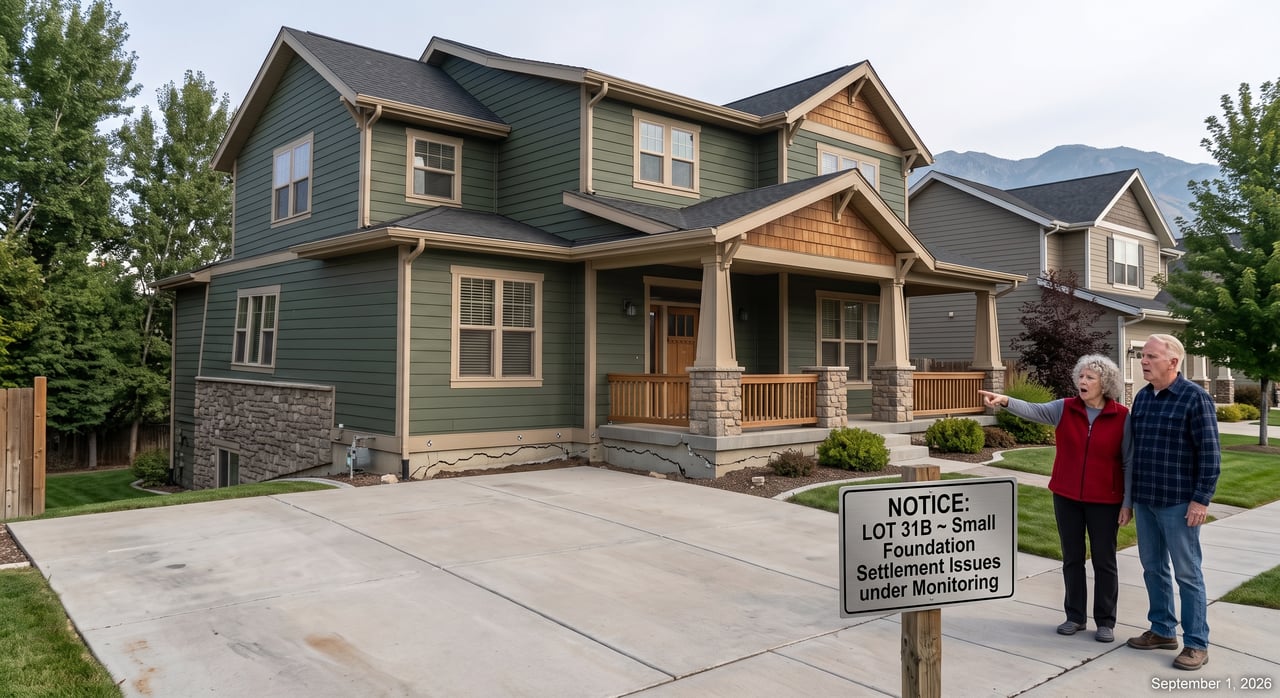
How do you sell a home with foundation issues in Idaho Falls?
Selling a home with known foundation problems in Idaho Falls requires disclosure on the RE-25 Property Condition Disclosure, a clear assessment of the severity of the issue, and a pricing or repair strategy that reflects the situation honestly. Depending on the severity, your options include repairing the foundation before listing, pricing as-is with full disclosure, or obtaining a structural engineer's report to provide buyers with clear documentation of the issue and what remediation looks like. Attempting to conceal foundation problems creates serious legal exposure and almost always surfaces anyway during inspection or appraisal.
By Eli Dahlin | Sep 8, 2026
Foundation concerns are among the most anxiety-producing issues a seller can discover before listing, and among the most important to handle correctly. Here's what you need to know.
The Disclosure Obligation Is Non-Negotiable
Idaho's RE-25 Property Condition Disclosure requires sellers to disclose known material defects. Foundation problems, cracking, settling, movement, or past repairs, are explicitly covered by the form. If you're aware of foundation issues and you don't disclose them, you're creating legal liability that can follow you well after closing.
"Aware of" matters here. If a previous owner told you about a foundation repair, that's a known fact. If you've seen the crack yourself and ignored it, that's a known fact. If you had a home inspection done and it surfaced concerns you didn't act on, that's a known fact.
Disclosure isn't optional, and no amount of cosmetic work that covers visible cracks changes the underlying disclosure obligation. If you know about it, you disclose it.
What Kind of Foundation Issue Are We Talking About?
Not all foundation concerns are equal, and the difference matters enormously for your strategy.
Minor shrinkage and settling cracks. Hairline cracks in a poured concrete foundation are extremely common in Eastern Idaho homes, particularly those built in the past several decades. Freeze-thaw cycles, soil composition, and normal concrete curing all produce minor cracking that is typically cosmetic and not structural. These should be disclosed but don't usually require significant remediation or cause major buyer concern when properly contextualized.
Stair-step cracks in block or brick foundations. These can indicate settling that has progressed beyond normal and warrant further evaluation by a structural engineer before listing.
Horizontal cracks in basement or foundation walls. Horizontal cracking, particularly with any bowing or deflection inward, indicates lateral soil pressure and is a more serious structural concern that typically requires remediation.
Active or prior water intrusion through the foundation. Water coming through cracks or seeping through the foundation floor is a disclosure item and affects both the structural assessment and buyer concerns about mold and moisture.
Significant settling with visible symptoms. Doors and windows that no longer close properly, visible floor slope, visible gaps between walls and ceilings, or separation at corners are symptoms of foundation movement that go beyond typical settling.
Getting a Structural Engineer's Report
For any foundation concern beyond hairline cosmetic cracks, getting a structural engineer's assessment before listing is one of the most useful things you can do as a seller. Here's why:
It tells you what you're actually dealing with. An engineer can distinguish between a cosmetic issue and a structural one, and give you a clear picture of remediation options and costs.
It gives buyers real information instead of uncertainty. A buyer who sees "foundation crack - see attached structural engineer's report with remediation recommendations" is in a much better position than one who sees "foundation crack - unknown" on a disclosure form. Uncertainty creates fear. Documentation creates informed decision-making.
It demonstrates good faith. A seller who invested in a professional assessment and can show buyers the results is demonstrating transparency, which builds trust rather than eroding it.
It may define a repair cost that you can either complete or price around. If the engineer says remediation costs $8,000-$12,000, you have a specific number to work with in your pricing or repair strategy.
Your Three Strategic Options
Option 1: Repair before listing. If the remediation is within a budget that makes financial sense relative to the resulting sale price improvement, completing the work and having it warranted by the contractor is the cleanest path. Documented, repaired, and warranted foundation work is a much easier selling story than an unrepaired issue.
Option 2: Price as-is with full disclosure and structural documentation. If you're not going to repair, price the home to reflect both the disclosed condition and the buyer's likely discount for taking on the remediation themselves. Provide the structural engineer's report as part of your disclosure package so buyers can make an informed offer rather than guessing at what they're buying.
Option 3: Offer a seller credit at closing for the repair. Similar to the roof credit strategy, you can list at a price that would be appropriate for a repaired home and offer a closing credit equal to the estimated remediation cost, based on the structural engineer's assessment. This works if the issue doesn't affect VA or FHA appraisal minimums and if the buyer is comfortable taking on the remediation post-closing.
Financing Implications
Foundation issues that a VA or FHA appraiser determines are structural concerns requiring remediation must be addressed before those loans can close. This is the same dynamic as a failing roof: if your home has foundation problems that flag as required repairs for government-backed loans, you've narrowed your buyer pool to cash and conventional financing unless you complete the remediation first.
For significant foundation issues, this is often the practical argument for completing repairs before listing: it opens your full buyer pool and eliminates the appraisal risk that could kill a deal mid-transaction.
Frequently Asked Questions
Do I have to disclose foundation problems when selling my home in Idaho Falls?
Yes. Idaho's RE-25 Property Condition Disclosure requires sellers to disclose known material defects, including foundation issues. Known settling, cracking, movement, prior repairs, and any symptoms of foundation problems must be disclosed honestly. Failing to disclose known material defects can expose you to legal liability after closing.
Can you sell a house with foundation issues in Idaho?
Yes. Foundation issues don't automatically prevent a sale. They require honest disclosure, accurate pricing that reflects the condition, and a clear strategy. Many Idaho Falls homes have been sold with disclosed foundation issues. The key is pricing and presenting the situation honestly rather than trying to obscure it.
How much does foundation repair cost in Idaho Falls?
Foundation repair costs in Eastern Idaho vary widely by the nature and severity of the problem. Minor crack injection or waterproofing runs $1,000-$5,000. More significant remediation involving wall anchors, piers, or drainage systems can run $8,000-$25,000 or more depending on the scope. Getting at least two contractor bids, ideally from foundation specialists, along with a structural engineer's assessment gives you the most reliable cost picture.
Will foundation issues affect the appraisal when selling in Idaho Falls?
Potentially yes. VA and FHA appraisers are required to flag structural issues that affect the safety or soundness of the property. If a foundation issue is flagged as a required repair, it must be addressed before a VA or FHA loan can close. Conventional and cash buyers are less constrained, though the appraiser may still make a value adjustment for significant foundation concerns.
If you're facing a foundation concern and you're trying to figure out the right strategy for your Idaho Falls home, I've helped sellers navigate this before and can help you think through the options. Reach out at dahlinrealestate.com/contact and I'll send along my Seller's Guide and we can talk through your specific situation.
About Eli Dahlin Eli Dahlin, REALTOR®, is a top 5% producing real estate agent with Silvercreek Realty Group, Idaho's largest independent brokerage. Serving Idaho Falls and Eastern Idaho, including Rigby, Shelley, Blackfoot, Pocatello, Rexburg, and Island Park, Eli has closed over 100 transactions and averages 20+ sales per year, with $20M projected 2026 production. He specializes in luxury homes, new construction, relocation, VA buyers, first-time buyers, and investment properties. Known for high-end marketing, strong negotiation, and modern video-driven listing strategies, Eli helps clients achieve exceptional results with a streamlined, professional experience.